Elena El Asmar

IMMAGINE IMMAGINARIA IMMAGINATA

with a contribution by Adelina von Fürstenberg

Elena El Asmar

IMMAGINE IMMAGINARIA IMMAGINATA

with a contribution by Adelina von Fürstenberg


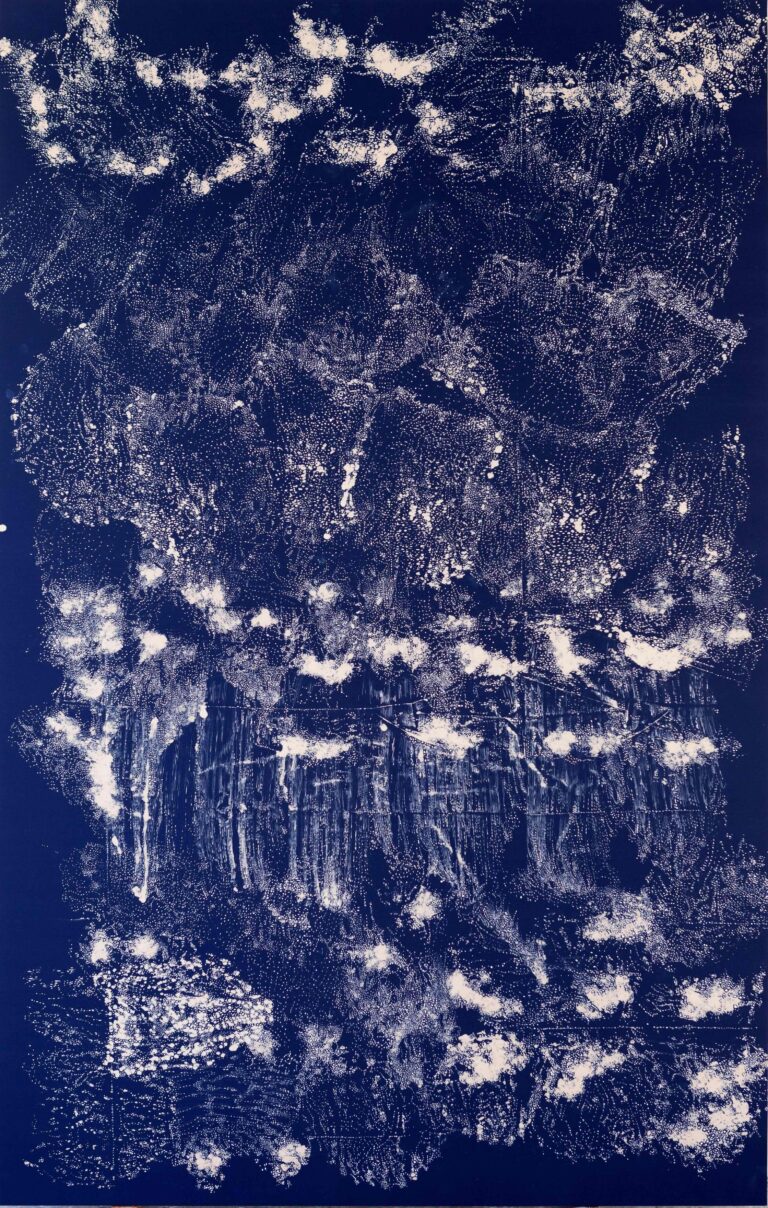
Elena El Asmar, Arioso Operoso, 2019

OPENING
Monday, October 5, 2026
from 6:30 p.m.

OPENING HOURS
October 8 through November 28, 2026
Thursday through Saturday
3:00 p.m. – 7:00 p.m.

Free admission with the Assab One 2026 card (€10)
For more information, please email info@assab-one.org

The new exhibition season at Assab One opens with Immagine immaginaria immaginata, a solo exhibition by Elena El Asmar, in which light, matter, and memory interact to shape images that are constantly evolving.

There is Lebanon and Milan, the East and the West, objects, spices, and memories that intertwine in Elena’s studio to shape a personal geography, both real and imagined. Then there is light, an essential element that passes through matter and alters our perception of it. Glass, fabric, and paper interact with light in different ways: they let it pass through, hold it, fragment it. The works emerge through traces, transparencies, and overlapping layers, in an uncertain space between what appears and what remains.

In the landscapes of Elena’s memory, Adelina von Fürstenberg finds an echo of the thought of the Persian mystic Sohrawardî and his “inner Orient,” a place towards which memory and imagination can point the way.

The three works on view, L’esercizio del lontano, Arioso operoso, and the Siparietti, inhabit this distance between matter and gaze, presence and memory, near and far. The image appears, transforms, and withdraws, leaving the viewer the space to continue imagining it.

Presentation by Adelina von Fürstenberg

The landscapes of memory created by Elena El Asmar, suspended between East and West, remind me of Shihāb al-Dīn Yahyā Suhrawardī (1155–1191), the Persian mystic and philosopher. He is considered the founder of the philosophy of Illumination, known as ishrāq, in which the search for the spirit passes through matter to rediscover the glimmers of an inner East.

In his Tale of Western Exile, Sohrawardî reflects on the soul far from its homeland and draws on spiritual memory and imagination to recreate the journey back to its source. Similarly, in her Milan studio, Elena El Asmar collects objects, spices and memories of Lebanon to reconstruct a mental map that leads us towards transformed, almost magical, landscapes of the Middle East, oscillating between reality and dream.

For Sohrawardî, the intermediate world (the World of Images or Malakût) is precisely a place where spiritual realities assume colourful, suspended forms. El Asmar’s tapestries, the shapes of her vases and her paintings act as veils that either let light through or hold it back. At Assab One, the artist reveals to us the poetry and hidden clarity, like the poet’s ‘mystery of the everyday’, where every object in the material world possesses a part of shadow (its material form) and a part of light (its divine essence).


Adelina von Fürstenberg

Text by Elena El Asmar

Light passes through matter and, while passing through it, withdraws.

Immagine immaginaria immaginata does not name an object, but a condition.

The image is born within a distance:
between what appears and what remains,
between light and its memory,
between matter and the gaze.

It is imaginary because it never fully coincides with what is seen.

Light, passing through things, is transformed, transforms us,
and by the time we look at it, it is already elsewhere.

It is imagined because it takes shape through making:

in a trace, in a transparency, in an overlapping.
The image is not sought in reality,
but is allowed to happen through matter.

Finally, it is image:

an unstable apparition, fulfilled only in the gaze.
Not a form to be held onto,
but something that continually withdraws and recomposes itself.

L’esercizio del lontano, Arioso operoso and the Siparietti inhabit this same distance.

Glass lets light pass through,
fabric holds it and transforms it,
paper is traversed by it, fragments it, allows it to surface.

Each work thus attempts to draw closer to something that cannot be possessed: an image before the image,
a presence that comes into being precisely as it vanishes, in the audacious act of desiring.

Perhaps the image exists only here,
in this interval between the visible and the imagined,
between what the work reveals
and what the gaze continues to imagine.

Elena El Asmar

Biographies

Elena El Asmar (Florence, 1978) is a co-founder of Madeinfilandia and spazio C.O.S.M.O.
She currently teaches Painting at the Academy of Fine Arts in Verona.
Born to a Lebanese father and an Italian mother, Elena El Asmar explores the relationship between memory, space and imagination in her artistic practice, translating the experience of memory into visual and narrative structures.

Working across drawing, painting, installation and the written word, her practice unfolds as a process of layering and continuous transformation, shaped by a tension between geographies and senses of belonging, in which matter and light become means of observing and moving through time.

Her most recent publications include Dove la notte ancor s’arrende, published by Gli Ori, and C’era una volta ed era celeste, published by La Vita Felice.

Her recent solo and group exhibitions in public and private venues include Palazzo Te (Mantua); MAH–Maison Tavel (Geneva, Switzerland); Building Terzo Piano and Building Box – Building Gallery (Milan); The Open Box (Milan); Galleria Antonio Verolino (Modena); Subplace (Milan); Fondazione Dino Zoli (Forlì); Complesso Museale di Santa Maria della Scala (Siena); CENTRALE for contemporary art (Brussels, Belgium); Orlando Museum of Art (Orlando, USA); Art Gallery of Alberta (Edmonton, Canada); Aga Khan Museum (Toronto, Canada); Museo d’Arte Contemporanea di Villa Croce (Genoa); Palazzo Ducale (Gubbio); La Galleria delle Prigioni (Treviso); Fondazione Berengo (Venice); La Galleria Nazionale d’Arte Moderna e Contemporanea (Rome); Fondazione Palazzo Magnani (Reggio Emilia); Galleria Anna Marra Arte Contemporanea (Rome); and Baert Gallery (Los Angeles, USA).


Adelina von Fürstenberg, awarded the Golden Lion at the 56th Venice Biennale for the Armenian Pavilion (2015), founded ART for The World in 1996, a non-governmental organization affiliated with the United Nations, active in the field of contemporary art and committed to promoting dialogue between cultures.

Among the first curators to take a sustained interest in non-Western artists, she paved the way to a multicultural approach to contemporary art.

Over the course of her long career, Adelina has founded and directed major institutions dedicated to contemporary art, including the Centre d’Art Contemporain in Geneva and the Magasin – Centre National d’Art Contemporain in Grenoble, where she also established its Curatorial School. She has collaborated with many of the leading artists of our time, including Chen Zhen, Alighiero Boetti, Ilya Kabakov, Marina Abramović, Sol LeWitt and Philip Glass.

Her most memorable projects include Dialogue of Peace, organized to mark the 50th anniversary of the United Nations; The Overexcited Body, exploring the relationship between art and sport; The Mediterranean Approach, a travelling exhibition first presented at the 54th Venice Biennale; Urban Manners, the only major survey of contemporary Indian artists ever presented in Italy; and the first Triennial of Contemporary Art in Armenia, held between Yerevan and Gyumri.

More recently, ART for The World has expanded its activities into film production. In 2008, it produced Stories on Human Rights, a collection of short films by 22 video artists and filmmakers from around the world; in 2010, Then and Now Beyond Borders and Differences, seven short films featuring, among others, Fanny Ardant, Jafar Panahi and Robert Wilson; in 2019, Interdependence, an anthology of 11 short films; and in 2022, Interactions, 12 short films addressing the increasingly precarious survival of nature as we know it.

At Assab One, she curated Augustin Rebetez’s exhibition Shake the Auroras (2019).


You might also enjoy

Lucia Pescador

Album

Inkjet print on Hahnemühle William Turner paper

Marta Dell'Angelo

MATRICI

curated by Marina Dacci

Paolo Giordano

The Valley of the Whirling Trees

Photographies and sculptures